Placement-policy layer for the GPU memory foundation: the abstract MemoryResource and its concrete host, emulated device, device, managed, pinned and mapped implementations. More...
#include <cstddef>#include "EBGeometry_GPU.hpp"#include "EBGeometry_GPURuntime.hpp"#include "EBGeometry_Macros.hpp"#include "EBGeometry_MemoryResourceImplem.hpp"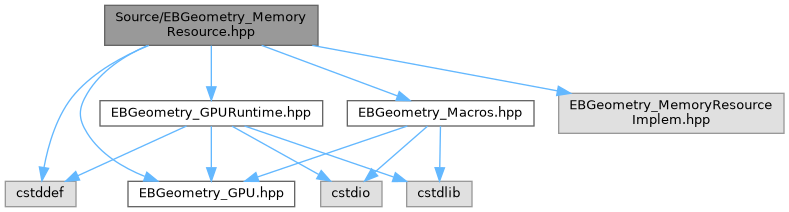
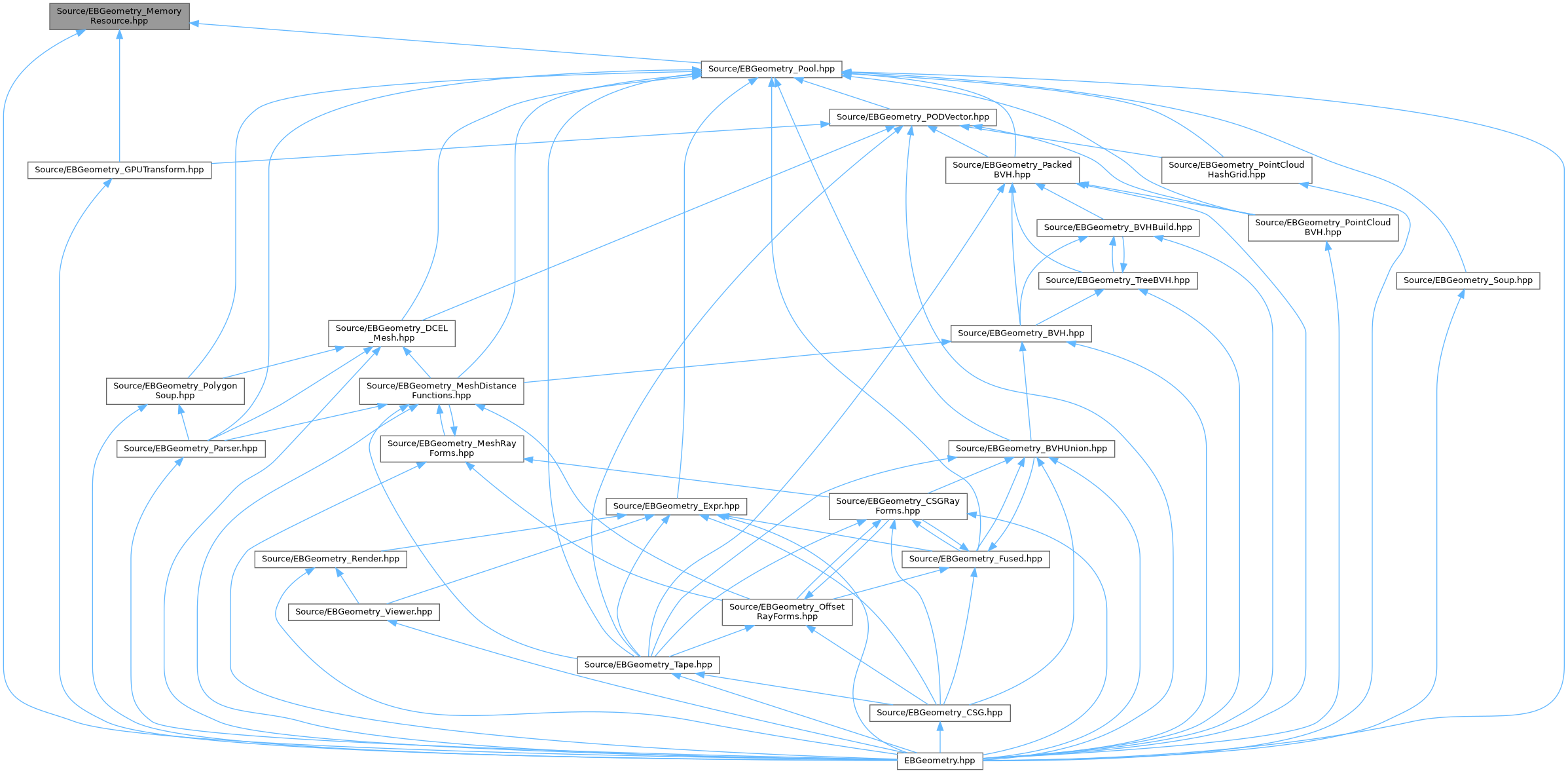
Go to the source code of this file.
Classes | |
| class | EBGeometry::MemoryResource |
| Abstract placement policy: allocates and frees raw, correctly-aligned byte blocks. More... | |
| class | EBGeometry::HostMemoryResource |
Host memory resource: plain aligned allocation in host RAM (std::aligned_alloc / free family). More... | |
| class | EBGeometry::EmulatedDeviceMemoryResource |
| Host memory that stands in for device memory: host RAM that reports itself device-accessible. More... | |
| class | EBGeometry::DeviceMemoryResource |
Device memory resource: raw device allocation (GPU::memAlloc / GPU::memFree). More... | |
| class | EBGeometry::ManagedMemoryResource |
Managed (unified) memory resource: one allocation reachable from host and device (GPU::memAllocManaged / GPU::memFree). More... | |
| class | EBGeometry::PinnedMemoryResource |
Pinned (page-locked) host memory resource: fast host-to-device staging (GPU::memAllocHost / GPU::memFreeHost). More... | |
| class | EBGeometry::MappedMemoryResource |
Mapped (zero-copy) pinned host memory resource: page-locked host memory also mapped into the device address space (GPU::memAllocHostMapped / GPU::memFreeHost). More... | |
Namespaces | |
| namespace | EBGeometry |
| Namespace containing all of EBGeometry's functionality. | |
Functions | |
| HostMemoryResource & | EBGeometry::hostMemoryResource () noexcept |
| Process-wide default host memory resource. | |
| EmulatedDeviceMemoryResource & | EBGeometry::emulatedDeviceMemoryResource () noexcept |
| Process-wide emulated device memory resource. | |
| DeviceMemoryResource & | EBGeometry::deviceMemoryResource () noexcept |
| Process-wide default device memory resource. | |
| ManagedMemoryResource & | EBGeometry::managedMemoryResource () noexcept |
| Process-wide default managed (unified) memory resource. | |
| PinnedMemoryResource & | EBGeometry::pinnedMemoryResource () noexcept |
| Process-wide default pinned (page-locked) host memory resource. | |
| MappedMemoryResource & | EBGeometry::mappedMemoryResource () noexcept |
| Process-wide default mapped (zero-copy) pinned host memory resource. | |
Variables | |
| constexpr size_t | EBGeometry::PoolBaseAlign = 256 |
| Block-base alignment for every Pool, in bytes. | |
Detailed Description
Placement-policy layer for the GPU memory foundation: the abstract MemoryResource and its concrete host, emulated device, device, managed, pinned and mapped implementations.
A EBGeometry::MemoryResource is a thin, runtime-virtual allocation policy: it decides where a block of bytes physically lives (host RAM, device memory, unified/managed memory, or page-locked host memory) without the caller knowing which. Allocation is a cold, once-per-build operation, so the virtual dispatch cost is irrelevant and the runtime-swappable placement is the whole point: the same POD scene structure (see EBGeometry::Pool and EBGeometry::PODVector) can be built into a host resource for a CPU query, or mirrored into a device resource for a kernel. Managed and mapped blocks are reachable from both sides: an object built directly in a managed pool reaches a kernel through rebasedView() onto that same pool once it is frozen, and a view of a managed or mapped pool also answers queries on the host (see EBGeometry::PoolLocation).
EBGeometry::HostMemoryResource (plain aligned host allocation) and EBGeometry::EmulatedDeviceMemoryResource (host memory standing in for device memory in a plain C++ build) are always compiled. The device-backed resources – EBGeometry::DeviceMemoryResource, EBGeometry::ManagedMemoryResource, EBGeometry::PinnedMemoryResource, EBGeometry::MappedMemoryResource – are compiled only when an offload backend is active (CUDA/HIP) or for documentation, behind the same guard as EBGeometry_GPURuntime.hpp, and reach the backend exclusively through the backend-neutral EBGeometry::GPU alias layer.
